
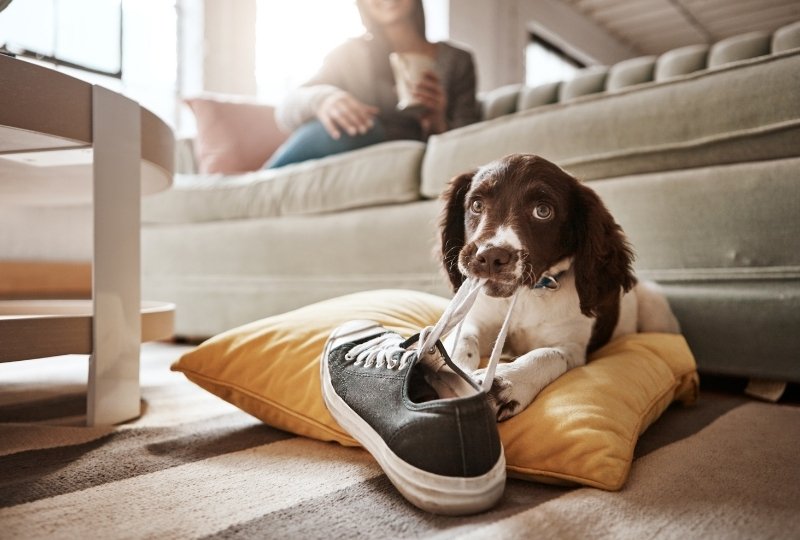
Puppy chewing is a natural behavior, but it can become frustrating when your shoes, furniture, or other household items end up as chew toys. Puppies chew for many reasons: teething discomfort, boredom, exploring their environment, or simply for fun. While chewing is normal, teaching your puppy what is acceptable early on is crucial to prevent damage and encourage good habits.
Here are 10 effective ways to stop your puppy from chewing shoes and why these methods work.
1. Provide Appropriate Chew Toys
Chew toys give your puppy a safe alternative to shoes. Durable toys designed for teething puppies satisfy their urge to chew while keeping your belongings intact. Make sure toys are appropriate for your puppy’s size and chewing strength.
2. Puppy-Proof Your Home
Remove or block access to shoes, clothing, and other tempting items. Baby gates, closed closets, and creating a designated puppy area can prevent unwanted chewing and make training easier.
3. Use Taste Deterrents
Bitter sprays designed for puppies can discourage chewing on shoes and other items. The unpleasant taste teaches puppies that chewing these objects is not rewarding, redirecting them to acceptable alternatives.
4. Supervise Your Puppy
Watch your puppy closely, especially during active periods. Immediate redirection when they start chewing inappropriate items helps them understand boundaries. Puppies learn best when corrections are timely and consistent.
5. Redirect With Positive Reinforcement
If your puppy begins chewing a shoe, calmly redirect them to a toy and praise them when they chew it instead. Rewarding desired behavior helps reinforce good habits faster than punishment alone.
6. Establish a Routine
Puppies are more likely to chew when bored or under-stimulated. Regular walks, playtime, and structured daily routines reduce boredom and decrease destructive chewing behavior.
7. Provide Mental Stimulation
Mental exercise is just as important as physical activity. Puzzle toys, treat-dispensing toys, and basic obedience training can occupy your puppy’s mind, reducing the likelihood of chewing shoes out of boredom.
8. Reward Calm Behavior
Puppies often chew when excited or restless. Praising and rewarding calm behavior, such as sitting quietly or resting, teaches your puppy that calmness brings positive attention, not chewing shoes.
9. Use Crate Training Wisely
Crate training can help manage chewing when you cannot supervise your puppy. The crate should be a positive and safe space with water, comfortable bedding, and chew toys. Never use the crate as punishment, as it can create fear and anxiety.
10. Consistency Is Key
All family members must follow the same rules regarding chewing. Mixed messages can confuse your puppy and slow down the training process. Consistency ensures your puppy understands which behaviors are acceptable.
Chewing is a normal part of puppy development, but with patience, guidance, and positive reinforcement, you can protect your shoes and household items while teaching your puppy good habits. Offering chew toys, supervising your puppy, and redirecting inappropriate behavior are all key steps in reducing destructive chewing.
If you’re in Cottleville, MO, and looking for help with puppy training or wellness, Cottleville Animal Hospital offers expert advice, checkups, and support to keep your puppy healthy and happy.
FAQs
Q1. At what age do puppies typically stop chewing everything?
Ans. Most puppies chew excessively between 3–6 months. With proper training, this behavior usually decreases as they mature.
Q2. Are all chew toys safe for puppies?
Ans. No. Choose toys appropriate for your puppy’s size, chewing strength, and age to prevent choking or ingestion of harmful materials.
Q3. How long does it take to stop a puppy from chewing shoes?
Ans. With consistent supervision and training, many puppies learn acceptable chewing habits within a few weeks.
Q4. Can boredom cause chewing?
Ans. Yes. Puppies often chew to entertain themselves if they are not given enough mental or physical stimulation.
Q5. Should I punish my puppy for chewing shoes?
Ans. No. Punishment can create fear or anxiety. Positive redirection and rewards are more effective.
Q6. Can teething be painful for puppies?
Ans. Yes. Puppies’ gums can be sore during teething, which is why they seek relief through chewing. Appropriate chew toys can help ease discomfort.