Surgical Excellence for Your Pet’s Health
We understand that the idea of your pet having surgery can be overwhelming. Whether it’s a routine procedure or a complex, life-saving operation, you can trust our experienced team to provide skilled, compassionate care every step of the way.
General & Advanced Surgery
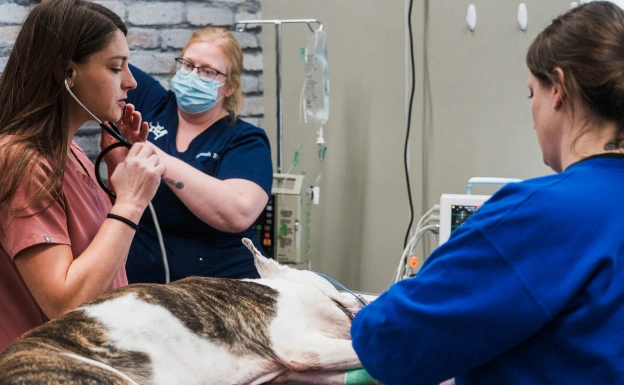
At Cottleville Animal Hospital, we understand that surgery can be a stressful experience for both pets and their owners. Our priority is to keep your pet as comfortable as possible while providing you with reassurance and clear communication every step of the way. With extensive training and experience in a wide range of surgical procedures, our team ensures your pet is carefully monitored before, during, and after surgery. We’ll keep you fully informed about the procedure, including potential risks, benefits, costs, and post-operative care, so you can feel confident in your pet’s care.
Spay/Neuter Procedure
We highly recommend spaying or neutering all dogs and cats to help prevent unwanted behaviors, reduce sexual instincts, and lower the risk of infections and serious diseases. These procedures are typically performed between 6-9 months of age, though we always consider each pet’s individual needs. Our skilled veterinarians prioritize your pet’s safety and comfort, closely monitoring them throughout surgery and recovery.
Neutering involves the removal of the testicles, which can reduce aggressive behavior, roaming, and the risk of testicular cancer and prostate disease. Before surgery, we perform a full physical exam and blood tests to ensure your pet is healthy enough for anesthesia. Recovery is generally smooth with minimal aftercare.
Spaying involves removing the ovaries and uterus to prevent heat cycles and pregnancy. It also eliminates the risk of uterine infections and ovarian/uterine tumors and can reduce the chance of malignant breast cancer by up to 90% if done before the first heat cycle. Pre-surgical exams and lab work are performed to ensure a safe procedure and recovery is typically straightforward.
Foreign Body Removal
A foreign body is any object your pet swallows that cannot be digested. While some foreign objects may pass through the gastrointestinal (GI) tract without issue, many can become lodged, leading to serious, potentially life-threatening complications.
The location where a foreign object gets stuck often depends on both your pet’s size and the size of the object. Larger items, like bones, may be too big to pass through the stomach, while smaller objects, like gravel, can become trapped in the intestines. One of the most dangerous foreign objects is string, which can twist through the intestines, causing a condition called a linear foreign body. This can cut off blood supply, potentially leading to intestinal perforation, sepsis, and even death. In some cases, string can slice through the intestinal wall if it becomes tightly wrapped.
If you suspect your pet has ingested a foreign object, contact us immediately—this is a life-threatening emergency. We will perform x-rays or an abdominal ultrasound to locate the object. If it’s unlikely to pass safely or poses too great a risk, it may need to be removed by inducing vomiting, endoscopy, or surgery—surgery is often required. Complications can include the need to remove damaged sections of the intestine, sepsis, and post-surgical infection.
Common Signs of a Gastrointestinal Tract Obstruction Include:
- Decreased appetite
- Lethargy
- Depressed attitude
- Vomiting
- Tense abdomen
- Abnormal stools
- Pale gums
- Weakness
Common Objects That May Require Surgical Removal Include:
- Socks
- Balls
- Chew toys
- Bones
- Hair ties
- Rocks
- Pantyhose
- Underwear
- Sticks
Tumors & Growths
Tumors and lumps are fairly common in older pets but can appear at any age. While not all growths are cancerous, removal is often recommended for your pet’s comfort and long-term health. Each case is carefully assessed based on your pet’s age, the likelihood of malignancy, and the size and location of the mass. In some cases, a needle aspiration can offer a preliminary assessment, but complete surgical removal and biopsy are usually the best options. This approach allows a pathologist to thoroughly examine the mass and determine whether additional treatment is necessary after your pet recovers.
Orthopedic Surgery
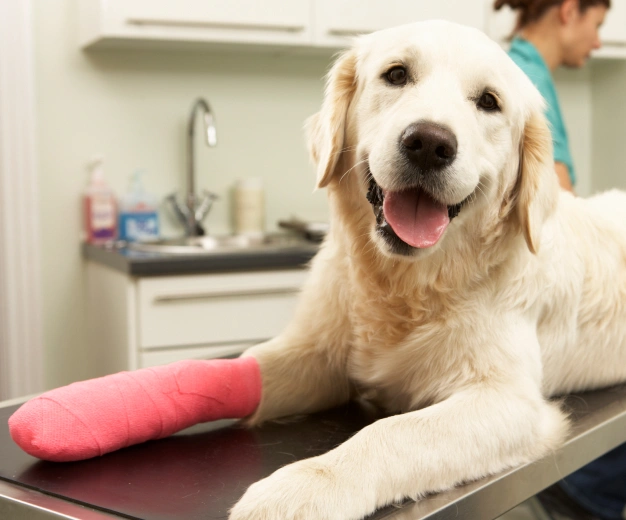
At Cottleville Animal Hospital, our in-house orthopedic specialists provide advanced care for fractures, dislocations, cruciate ligament tears (ACL), luxating patellas, and more. We also offer supportive options for conditions that can’t be fully reversed, focusing on your pet’s comfort and mobility.
Common signs of orthopedic issues include limping, difficulty jumping, lethargy, irritability, and behavioral changes. Our team uses modern surgical techniques like bone plating, pinning, and fixation to effectively treat injuries. We also perform amputation when necessary for severe cases.
We’ll guide you through every step, discussing all treatment options and helping you make the best decision for your pet’s health.
Soft Tissue Surgery
Our soft tissue surgeries range from simple mass removals to complex procedures involving internal organs. Most of these surgeries can be safely performed on-site in our fully equipped surgical suite. No matter the procedure, our team is dedicated to providing exceptional care for both you and your pet.
Advanced Anesthesia Monitoring and Safety
Your pet’s safety is our top priority during every surgical procedure. At Cottleville Animal Hospital, we use advanced anesthesia monitoring equipment and strict protocols to support your pet before, during, and after surgery.
Every patient receives an intravenous catheter to allow safe delivery of anesthesia, fluids, and emergency medications if needed. IV fluids are administered throughout the procedure to support blood pressure, circulation, and organ function.
Our team continuously monitors vital signs, including heart rate (HR), respiratory rate (RR), blood pressure (BP), oxygen saturation (SpO₂), end-tidal CO₂ (EtCO₂), and body temperature. These measurements help us assess how well your pet is breathing, circulating oxygen, and responding to anesthesia in real time.
To maintain comfort and prevent heat loss, we provide active warming support throughout surgery. A trained team member is dedicated to anesthesia monitoring for the entire procedure, allowing us to respond immediately to even subtle changes.