

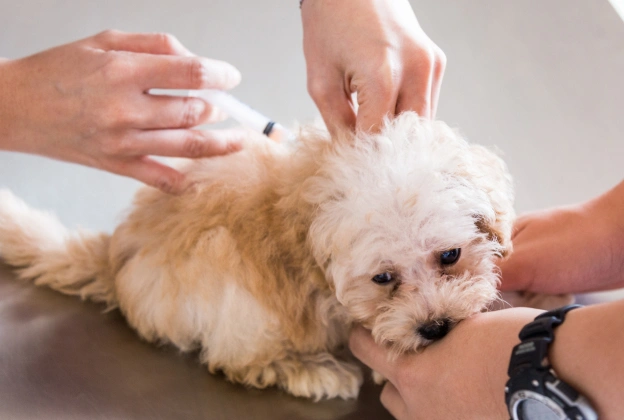
Smart Protection Starts With Vaccines
Vaccines play a vital role in keeping most pets healthy. Vaccination schedules may differ depending on factors like your pet’s age, lifestyle, and where you live. Our veterinarians will work with you to review these details and make sure your pet gets the right protection.
Your Puppy’s Vaccination Schedule for the First 6 Months
Based on your puppy’s health history and our veterinarian’s guidance, exams and vaccinations are usually scheduled at 8, 12, and 16 weeks of age. As your puppy matures, we’ll adjust future vaccinations to provide the right protection while avoiding unnecessary doses.
Here’s a typical timeline for your puppy’s first six months:
- 6 Weeks: Health exam, deworming, intestinal parasite testing, and DHPP vaccine (Distemper, Hepatitis, Parvovirus, Parainfluenza)
- 9 Weeks: Health exam, deworming, intestinal parasite testing, DHPP booster, and Bordetella vaccine
- 12 Weeks: Health exam, deworming, intestinal parasite testing, DHPP booster, and Leptospirosis vaccine
- 16 Weeks: Health exam, deworming, intestinal parasite testing, DHPP booster, Leptospirosis booster, and Rabies vaccine
Following this schedule ensures your puppy gets the best protection during their most vulnerable early months. We’re here to support you every step of the way on your puppy’s health journey!
What Does the DA2PP Vaccine Protect Against?
The DA2PP vaccine, commonly known as the "Distemper Combo," is a core vaccination for puppies and dogs that provides protection against several serious diseases:
- Distemper: A contagious virus spread through bodily fluids that can cause seizures, vomiting, diarrhea, coughing, and unusual behavior.
- Adenovirus Type 2: This virus, spread through nasal discharge and urine, can lead to liver and kidney failure. It mainly affects the tonsils and larynx, often causing sore throat, coughing, and sometimes pneumonia.
- Parainfluenza: A virus that causes mild respiratory infections and upper airway inflammation, which can develop into serious pneumonia. It spreads quickly, especially in places where dogs are in close contact, through exposure to nasal secretions from infected dogs.
- Parvovirus: A highly contagious and life-threatening virus that primarily affects unvaccinated dogs. It causes fever, vomiting, bloody diarrhea, extreme lethargy, and loss of appetite. Parvovirus severely damages the intestines, leading to painful eating and rapid dehydration.
The DA2PP vaccine is essential for safeguarding your pet against these serious and potentially life-threatening diseases.
Essential Vaccines to Keep Your Pet Protected
The DA2PP vaccine, commonly known as the "Distemper Combo," is a core vaccination for puppies and dogs that provides protection against several serious diseases:
- Leptospirosis: Leptospirosis is a bacterial infection that affects many mammals, including wildlife and livestock. It spreads through the urine of infected animals, often contaminating water sources where the bacteria thrive. This disease is common in rural, suburban, and urban areas, especially where wildlife and standing water are present. Leptospirosis is zoonotic, meaning it can also infect humans, and it can cause severe liver and kidney damage in pets.
- Bordetella (Kennel Cough): The Bordetella vaccine protects against kennel cough, a highly contagious upper respiratory infection that spreads quickly in places where dogs gather, such as kennels, dog parks, or grooming facilities. Symptoms include a harsh, hacking cough and sometimes clear, foamy vomit. If left untreated, it can lead to more serious conditions like pneumonia.
- Rabies: The rabies vaccine is legally required in Colorado for both dogs and cats. Rabies is typically transmitted through the bite of infected wildlife. While once rare in the region, recent outbreaks have increased the risk for pets. Rabies is always fatal once symptoms appear, and it can only be confirmed through testing the brain tissue of the infected animal.

Your Kitten’s First 6 Months of Care
Based on your kitten’s health history and our veterinarian’s guidance, exams and vaccinations are usually scheduled at 8, 12, and 16 weeks of age. As your kitten matures, we’ll adjust the vaccination timeline to provide the right level of protection without unnecessary doses. Here’s a typical vaccination plan for your kitten’s first six months:
- 6 Weeks: Wellness exam, combo test, deworming, intestinal parasite screening, FVRCP (Feline Viral Rhinotracheitis, Calicivirus, Panleukopenia) vaccine, and FeLV (Feline Leukemia) vaccine.
- 9 Weeks: Wellness exam, deworming, intestinal parasite screening, and boosters for FVRCP and FeLV vaccines.
- 12 Weeks: Wellness exam, deworming, intestinal parasite screening, and FVRCP booster.
- 16 Weeks: Wellness exam, deworming, intestinal parasite screening, and final FVRCP booster along with the Rabies vaccine.
Following this schedule helps keep your kitten safe from common and serious diseases as they grow and thrive.
What the FVRCP Vaccine Does for Your Cat’s Health
The FVRCP vaccine, commonly known as the “Feline Distemper Combo,” is a core vaccination that shields your cat from three major diseases:
- Feline Viral Rhinotracheitis (FVR): A major cause of upper respiratory infections in cats, accounting for about 40-50% of cases. It spreads easily through coughing and sneezing. Common symptoms include fever, sneezing, eye discharge or irritation, and breathing difficulties.
- Calicivirus: A contagious respiratory virus that causes flu-like symptoms such as loss of appetite, mouth sores, breathing trouble, runny eyes and nose, fever, and joint stiffness. It spreads through direct contact with saliva, nasal or eye discharge, and sometimes feces from infected cats.
- Panleukopenia: Also known as feline distemper, this highly contagious and life-threatening disease is caused by feline parvovirus. It spreads through all body fluids and feces, particularly in outdoor or unvaccinated cats. Symptoms include vomiting, fever, weight loss, lethargy, eye issues, and, if untreated, can result in sudden death.
The FVRCP vaccine is vital for protecting your cat against these serious and potentially life-threatening diseases.
Protect Your Cat from FeLV and Rabies with Vaccines
The FVRCP vaccine, commonly known as the “Feline Distemper Combo,” is a core vaccination that shields your cat from three major diseases:
- Feline Leukemia Virus (FeLV): FeLV is one of the leading causes of death in cats, severely weakening the immune system and often leading to anemia or lymphoma. It spreads through bodily fluids, including from mother to kitten or through bites from infected cats, especially in outdoor environments. Common symptoms include fever, loss of appetite, swollen lymph nodes, pale or inflamed gums, recurring infections, seizures, and behavioral changes. While cats can live with FeLV for years, there is currently no cure.
- Rabies: Rabies is a core vaccine legally required in Colorado for both cats and dogs. It is typically transmitted through bites from infected wildlife. Although once rare in the region, recent outbreaks have increased local cases. Rabies is always fatal once symptoms develop, and the only definitive diagnosis is through testing brain tissue after death. Vaccination is the best protection for your pet and your community.